

what they couldn’t take
Part 2

sweeties when we left käthe she was 65 years old, kneeling at her son’s grave in belgium, beside stone version of herself she had spent 18 yrs making. she stood up, went home. & then thee world she came home to started disappearing.

start here if u haven't already💚
a girl who drew everything

Her name was Käthe Schmidt & she was five years old when someone first put charcoal in her hands.
it began in february 1933
hitler had just come to power & the prussian academy of arts, the institution käthe had given 15 yrs of her life to, thee place that had made her its first ever female member, sent her a message. resign or we will shut the academy down entirely. they used academy as a hostage. resign or everyone loses everything.
käthe resigned
she was 65 yrs old. she had been the first woman ever elected to the prussian academy of arts. she had been the first woman awarded the pour le mérite, germany’s highest honor for science & art. she had been called gutter art by a kaiser & kept going. & now a new government was using the institution she loved as leverage to remove her from it & she stepped back because she would naut let everyone else pay for her refusal.
i want u to sit with that decision for a moment. she did naut fight it. she resigned quietly & let them have the academy because fighting would have meant other people suffering for her presence. that is a specific kind of strength that does naut look like strength from outside. it looks like surrender. it was nOt.
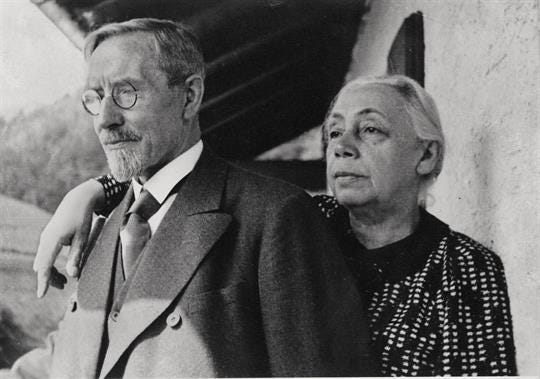
& then taking continued. in 1935, her works were removed from an exhibition in munich one day before it opened. in 1936, she gave an interview to a moscow newspaper where she spoke honestly & the gestapo called her in for questioning afterward & told her that if it happened again she would be sent to a concentration camp. in 1937, as part of the campaign called “entartete kunst” degenerate art, her work was confiscated from at least eleven german museums. taken off walls, removed from rooms, thee art that she had made about poverty, mothers, grief & human bodies was declared degenerate by people who had decided they knew what art was supposed to do.
her 70th birthday exhibition at a berlin gallery had to be cancelled entirely. another exhibition was closed immediately after it opened. käthe, who had shown her work across europe, america & russia, who had been celebrated, collected & honored, was now showing her remaining pieces privately in her studio on klosterstrasse, for friends of friends, quietly in a room instead of a gallery.
she kept making.
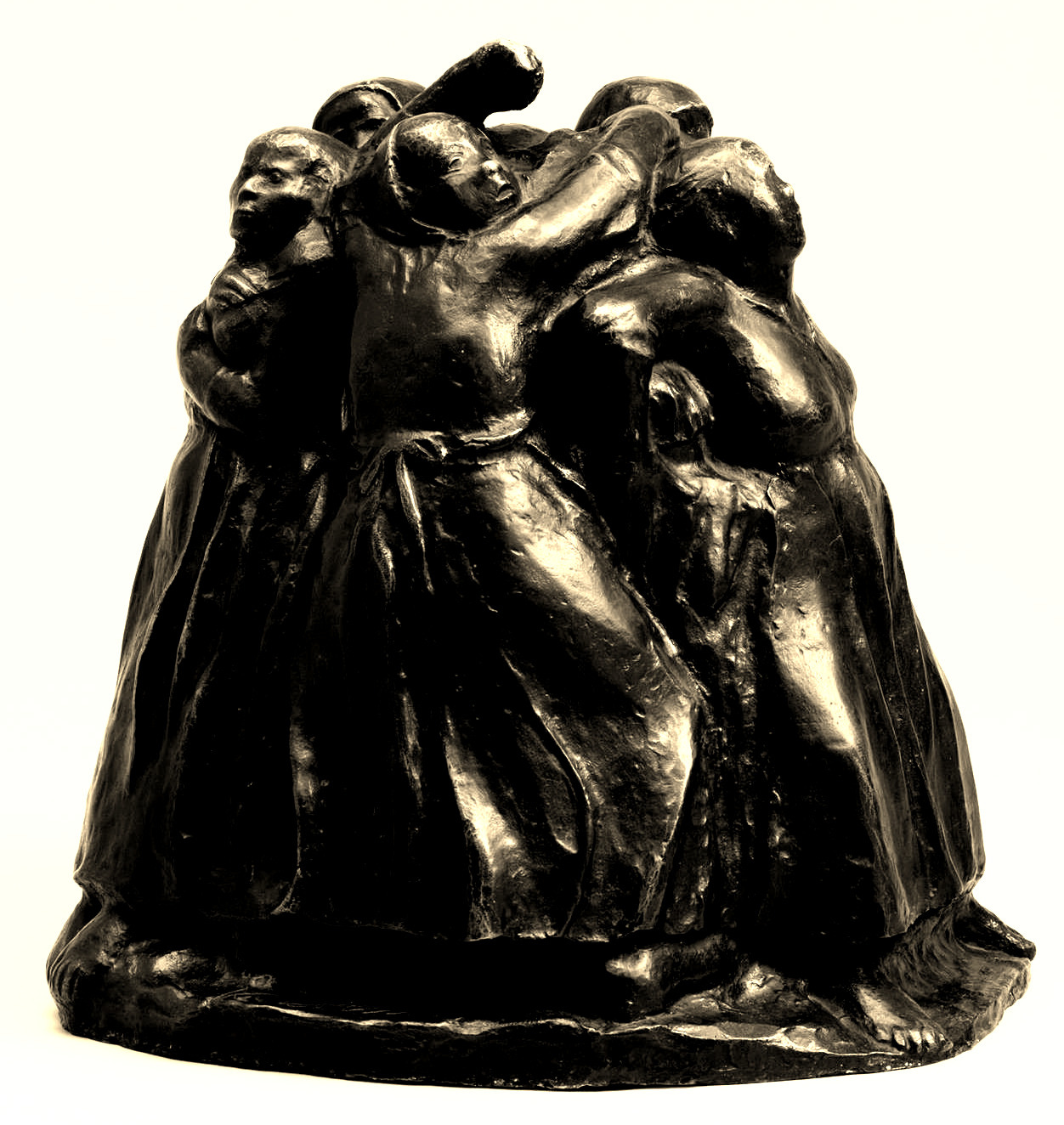
sweeties i want to tell u something about what käthe was making during these years because i think it is the most important part & thee part that gets lost when people tell her story as only a tragedy. while nazis were removing her work from museums, while they were threatening her with concentration camps, while everything external was being stripped away, she was in her studio making the tower of mothers, which is a circle of women wrapping their bodies around their children with their arms facing outward like a fortress, & the pietà & a series of prints called death which she worked on from 1934 to 1937. she was 67, 68, 69, 70 years old & she was making work about death, mothers & protection during these yrs when the government was trying to make her disappear. she did naut disappear. she made art about disappearing instead.
& then 1940 arrived. karl kollwitz, her husband, the doctor who had believed medicine should go where people needed it most, thee man she had lived beside in prenzlauer berg for over fifty years, theee man who had been beside her through peter & through the nazis & through everything, died on july 19, 1940. he was 77. they had been married for 49 yrs.
käthe was 73 years old & suddenly alone in the flat on weissenburger strasse they had shared since 1891. she had lived there for 52 years. karl’s surgery had been downstairs. her studio had been upstairs. neighborhood outside had changed from the working class poverty she had drawn for decades into something bombed, broken & barely recognizable. & karl was gone!!
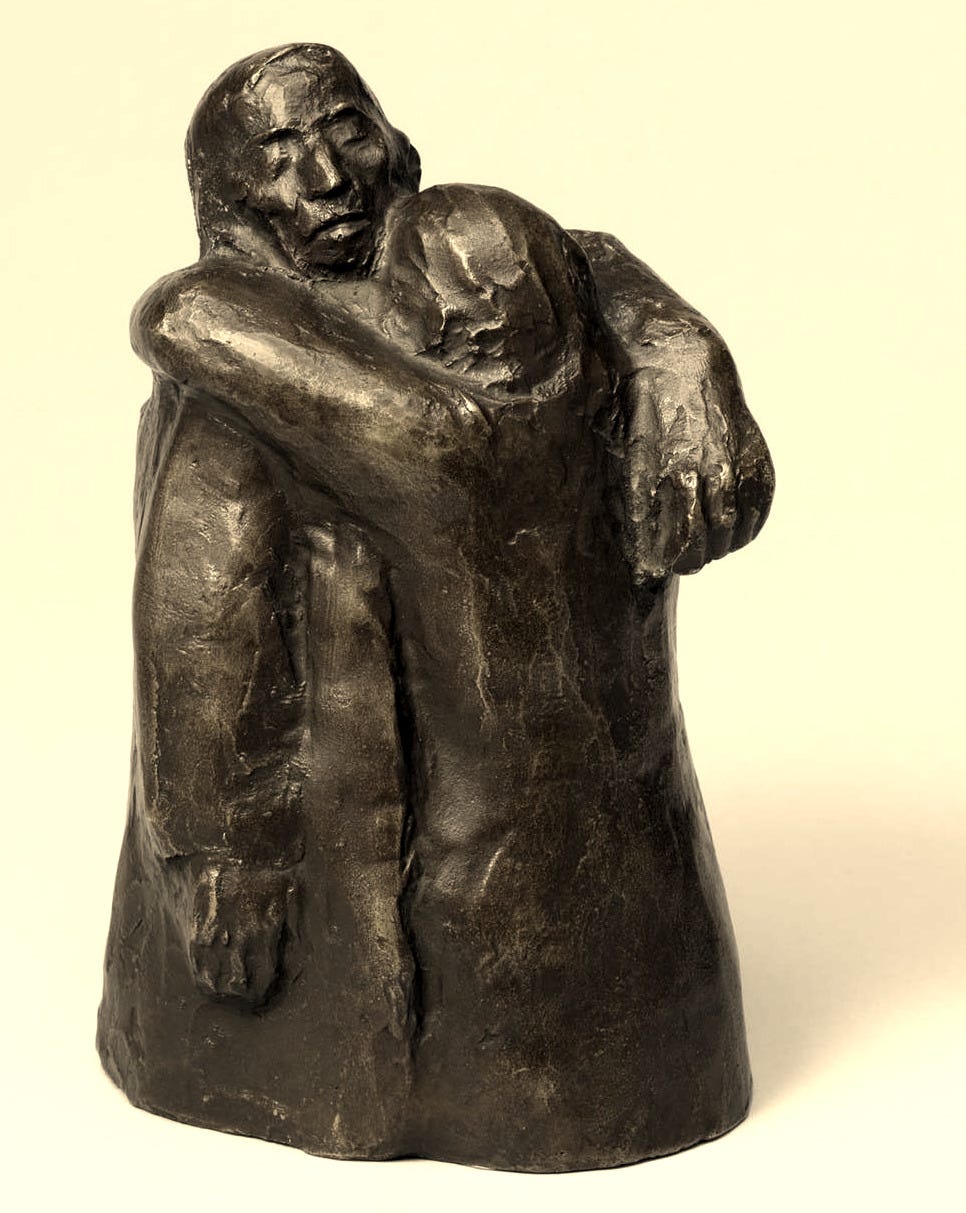
she made a small sculpture after he died. she called it “abschied”, which means farewell. two figures wrapped around each other. she had just lost thee person she had spent her entire adult life beside & she did what she had always done when something was unbearable. she picked up her tools & she made it into something u could hold.
I am working on a small group with the man – Karl – letting go of me, withdrawing from my arms. He lets himself sink to the floor.
Käthe Kollwitz, Diaries, February 1940
& then in 1942, her grandson peter, hans’s son, boy named after thee son she had lost in 1914, was killed on the eastern front near rzhev. he was drafted in 1940 & died on sept. 22, 1942. she had named her grandson after a son she had sent to war & now grandson was gone too in another war, same way, a young man dying somewhere far from home.
i do naut know how to write about this without just sitting with it for a while. she had sent peter to war in 1914 believing in something & she had spent 18 yrs making a memorial from that loss & now his namesake, a boy who carried his name into thee next generation, was dead in thee same way in a second world war & käthe was 75 yrs old & alone in a flat that would be destroyed by bombs in the following yr.
she made her last lithograph in 1941. she called it “saatfrüchte sollen nicht vermahlen werden” which translates to “seeds for sowing should not be ground”. it was a mother wrapping her arms around her children, pulling them back from something, holding them away from whatever was coming. she printed very few copies. she said it was her legacy.
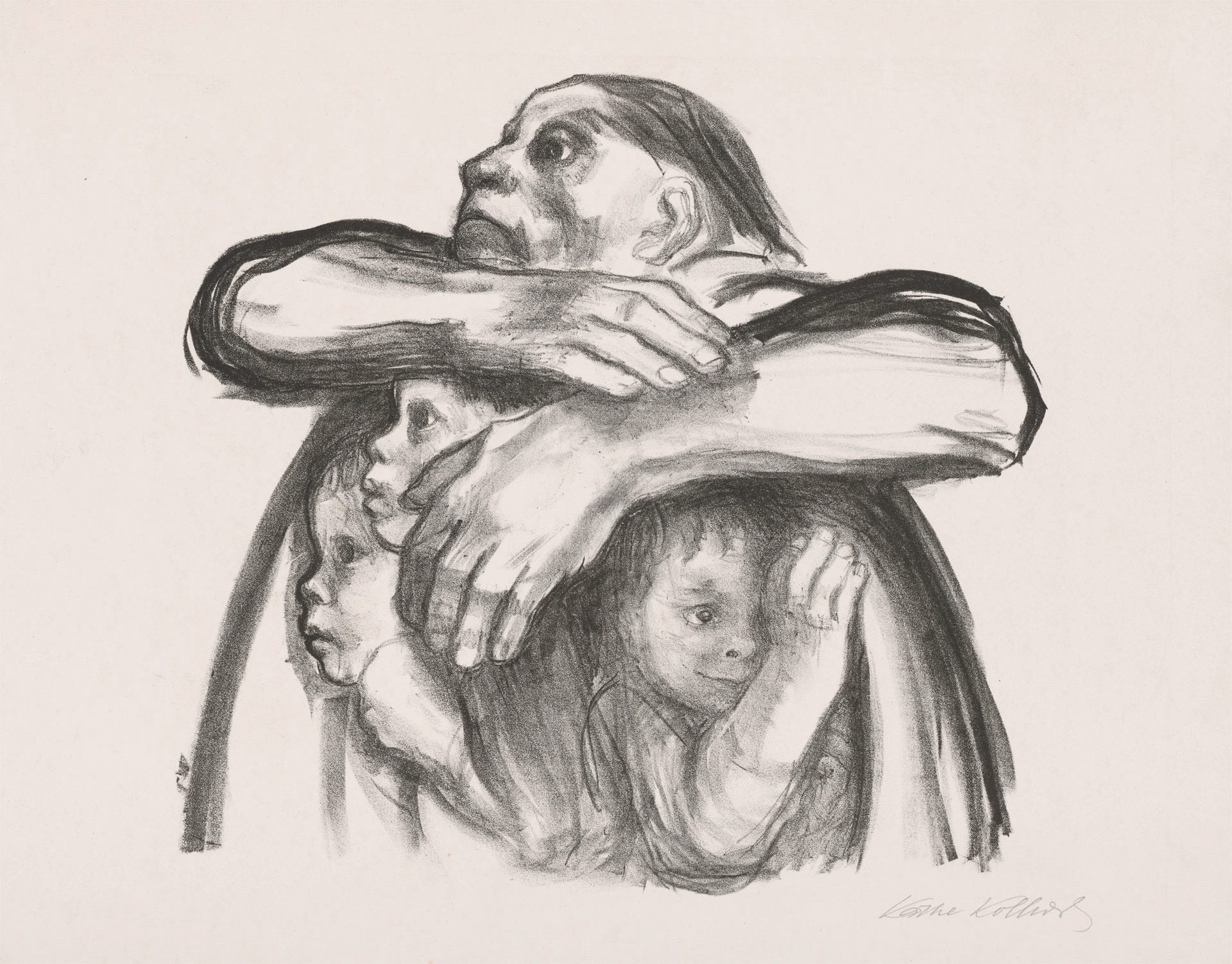
I have decided – for the 3rd time – to take up the same theme and said to Hans a few days ago: This is now my legacy: Seed for sowing should not be milled [….…] So I painted the same scene again: Boys, proper Berlin boys, who greedily scent the air outside like young horses, are held back by a woman. The woman (an old woman) has wrapped the boys into her protective mantle, spreading her arms and hands over them in a violent and dominant gesture. Seeds for sowing must not be ground – this demand is, like Never again War, not a sentimental yearning, but a command, a demand.
Käthe Kollwitz, Diaries, December 1941
in aug. 1943, the berlin air raids began in earnest & käthe left flat she had lived in since 1891 & moved to nordhausen in thuringia, to stay with a sculptor named margret böning who had offered her space. & then in nov. 1943, a bomb destroyed the flat on weissenburger strasse entirely. 52 yrs gone. studio, rooms, walls she had looked at while karl was dying & while she was making things & while peter was away at war. all of it gone.
in july 1944, she accepted an invitation from a prince named ernst heinrich von sachsen & moved to moritzburg, a small town near dresden. she moved into a two-room apartment at a place called rüdenhof. she was 77 years old. she had left berlin, left flat, left neighborhood she had drawn for 55 yrs. she had almost nothing left that was recognizable from thee life she had built.
she was still drawing.
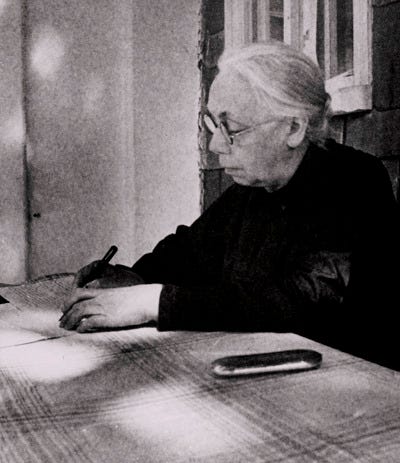
sweeties i keep thinking about what it means to keep making things when everything is being taken. her son gone. her grandson gone. her husband gone. her flat gone. her work confiscated & labeled degenerate. her institution taken. her exhibitions cancelled. her country unrecognizable & käthe kollwitz at 77 in two rooms in moritzburg, still drawing.
someone asked her once what she believed in & she said she believed in making things for the people who had nothing. she had spent her life drawing faces of people world did naut look at & she had never stopped looking. even when the world told her that looking was degenerate. even when they took her work off the walls. even when there was almost nothing left to make it with.
she kept drawing.
the war was still going when april 1945 arrived. it was eight days from ending. & käthe kollwitz died in moritzburg on april 22, 1945 in her 2 room apartment, surrounded by almost nothing that had belonged to her original life. only a few close friends came to her funeral.
before 8 days
she did naut live to see the end of thing that had taken everything from her.
& i think about that too. how close she came. how eight days is nothing & also everything. how she had survived all of it kaiser, first world war, peter, nazis, karl, bombs, evacuation, second grandson, second war & she made it to 77 years old & she died eight days before it was over.
but here is what i want to leave u with before part three sweeties. käthe kollwitz was 66 when the nazis forced her out of the academy. she was 70 when they confiscated her work from eleven museums. she was 73 when karl died. she was 75 when her grandson peter died. she was 76 when her flat was bombed. she was 77 when she died in moritzburg.
& across all of those yrs, with everything being removed one thing at a time, she kept drawing herself. over & over!! her own face in charcoal, lithograph & sculpture.
more self-portraits than almost any artist in history, made during the years when thee world was most insistent that she should naut exist.
& that is what part 3 is about. why does a woman who has had everything taken from her keep drawing her own face? i have been thinking about that question for yrs, ever since i first read about her!!
come back💚💚
sweeties if this story gave u something, pass it to ur sweeties
💚💚💚

Part III
she drew her own face

Why does a woman who has had everything taken from her keep drawing her own face?
This was one of the most moving pieces I've read in a long time. You didn't just recount kathe's life, you made her resilience, grief, and unwavering humanity feel deeply present. You wove history with emotion, which is extraordinary. Thank you for preserving her legacy with such care and heart.
Wow, Angel, your writing is on fire! And you got me with this one! Remember me saying that you got me so curious with Part I that I had to skip ahead with the story? Well, I'm so glad for this Part 2 because I would have missed a masterpiece and all the facts you packed in that the "official" storytellers didn't! What a marvelous artist and woman she was--which made me think what a marvelous writer and young woman you are becoming as I sit back halfway 'round the world and read your stories. I am honored to have met you early enough to see you "Become." Much love, Susan