

she drew her own face
Part 3

sweeties while i was still writing this final piece, Douglas L. Peck at Crown Valley Quarterly read parts one & two & shared them with his own readers under the title The Story of Käthe Kollwitz, before i had even finished. i did naut expect that & it made me want to get this right even more than i already did. this one is for everyone who waited🤗

start here if u haven't already💚
Part I
a girl who drew everything

Her name was Käthe Schmidt & she was five years old when someone first put charcoal in her hands.
Part II

sweeties i have been sitting with this last piece for a while because i did naut want to get it wrong.
i want to ask u something before i begin. when everything is taken from u, & i mean everything people, places, work, recognition, country u thought u knew, when all of it gets removed one thing at a time across decades until u r 77 years old in two rooms in a town u did naut grow up in, what do u reach for?
käthe kollwitz reached for a mirror. she drew her own face over a hundred times across her lifetime. more self-portraits than almost any artist in history. she began when she was young & drawing herself was practice, learning the architecture of a face by starting with thee one most available to her. & then somewhere along the years it became something else entirely. it became a conversation she was having with herself that nobody else was invited to. it became a record. it became proof.
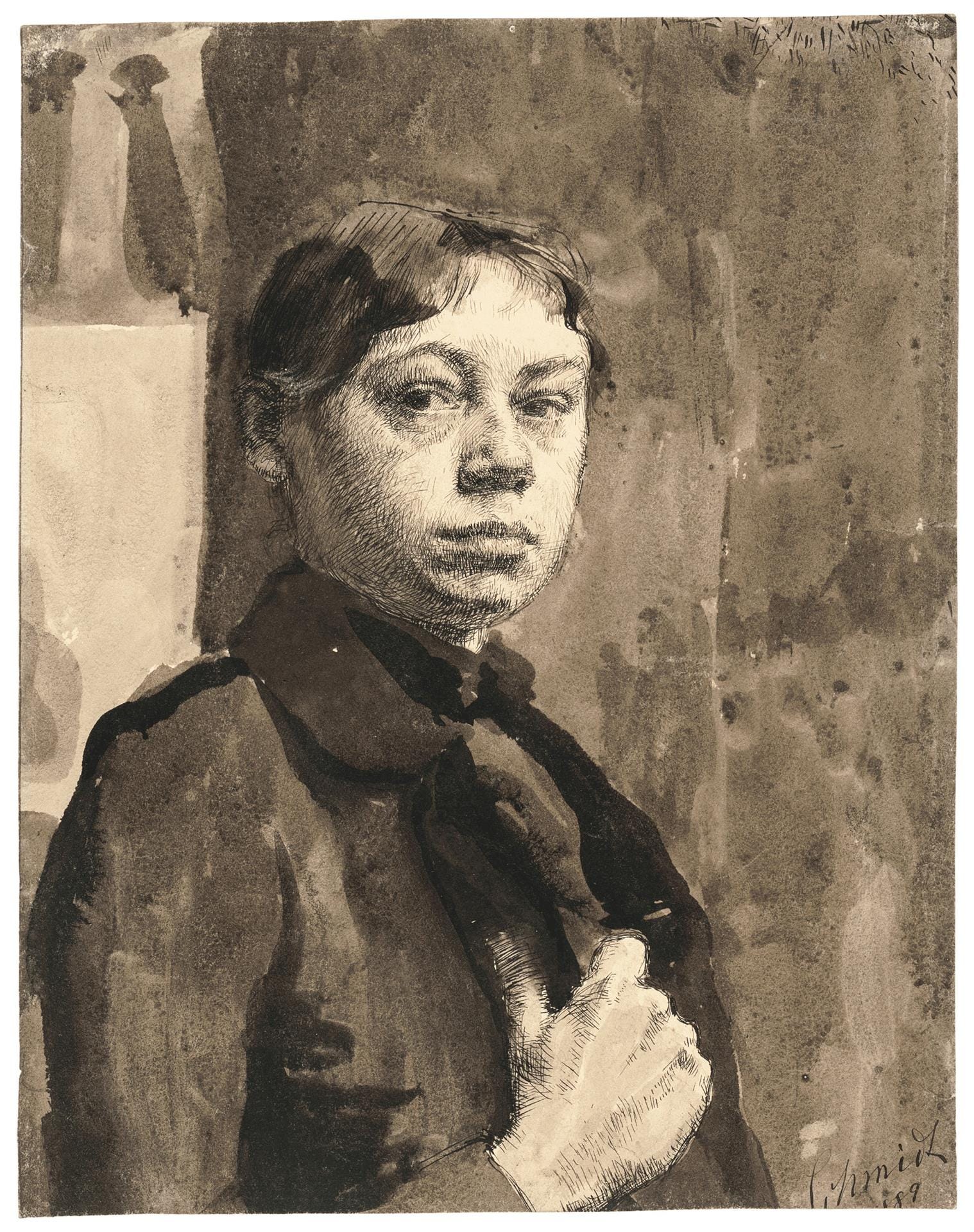
sweeties i want to tell u something about self-portraits that i have been thinking about for a long time. when u draw ur own face u r doing something that has almost nothing to do with vanity, despite everything we have been told about women who look at themselves. u r doing something much stranger & much braver. u r asking the question “who is here” & then answering it urself without waiting for anyone else to tell u. u r saying i exist & i will prove it with my own hands. u r making urself the subject at a time when subjects r supposed to be chosen by people with more power than u.
käthe spent her whole life drawing people who were naut supposed to be subjects. weaving women, starving children, mothers holding dead children, workers whose faces nobody thought were worth looking at, & then she drew her own face alongside all of them because she understood something that took me a long time to understand too. she was also one of thee people world did naut think was worth looking at. she was a woman. she was old. she was making grief visible in a country that wanted triumphant paintings. she drew herself same way she drew everyone else, without flattery, without softening, with same unflinching attention she gave to every face she had ever looked at.
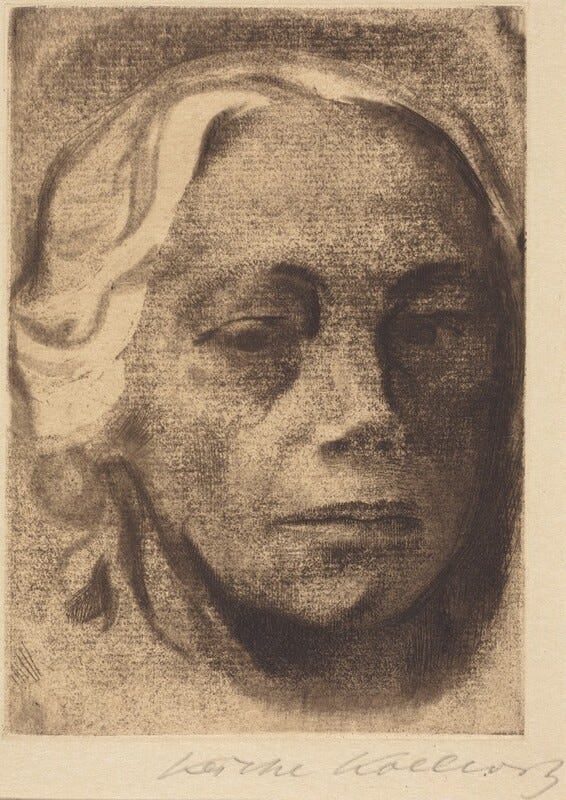
Don’t hide yourself – be the person you are, and find your essence.
Käthe Kollwitz, Diaries, 18 February 1917
& her face changed. across the 100+ self-portraits u can watch her age in real time. the 1889 portrait & the 1934 portrait r not just different ages. they r different worlds. in 1889 she is learning her own face. in 1934 she has been through peter, the weavers, the kaiser, the first world war, the happy decade, the nazis, karl getting sick, losing the academy, the confiscations & everything in between, & her face in 1934 carries all of it without explaining any of it. she is looking directly at u & she is naut asking for ur sympathy & she is naut performing her grief & she is naut pretending anything did naut happen. she is just there, present & still!!
that 1934 portrait, sweeties is thee one we used in the “speak” article. it is thee one that made me cry when my friend was designing the thumbnail. & i think the reason it does that to people is because it is a face that has absorbed an enormous amount of loss & has naut been destroyed by it & has naut been made peaceful by it either. it is a face that is still in the middle of living even at 67. still looking, still present, still asking questions with its eyes.
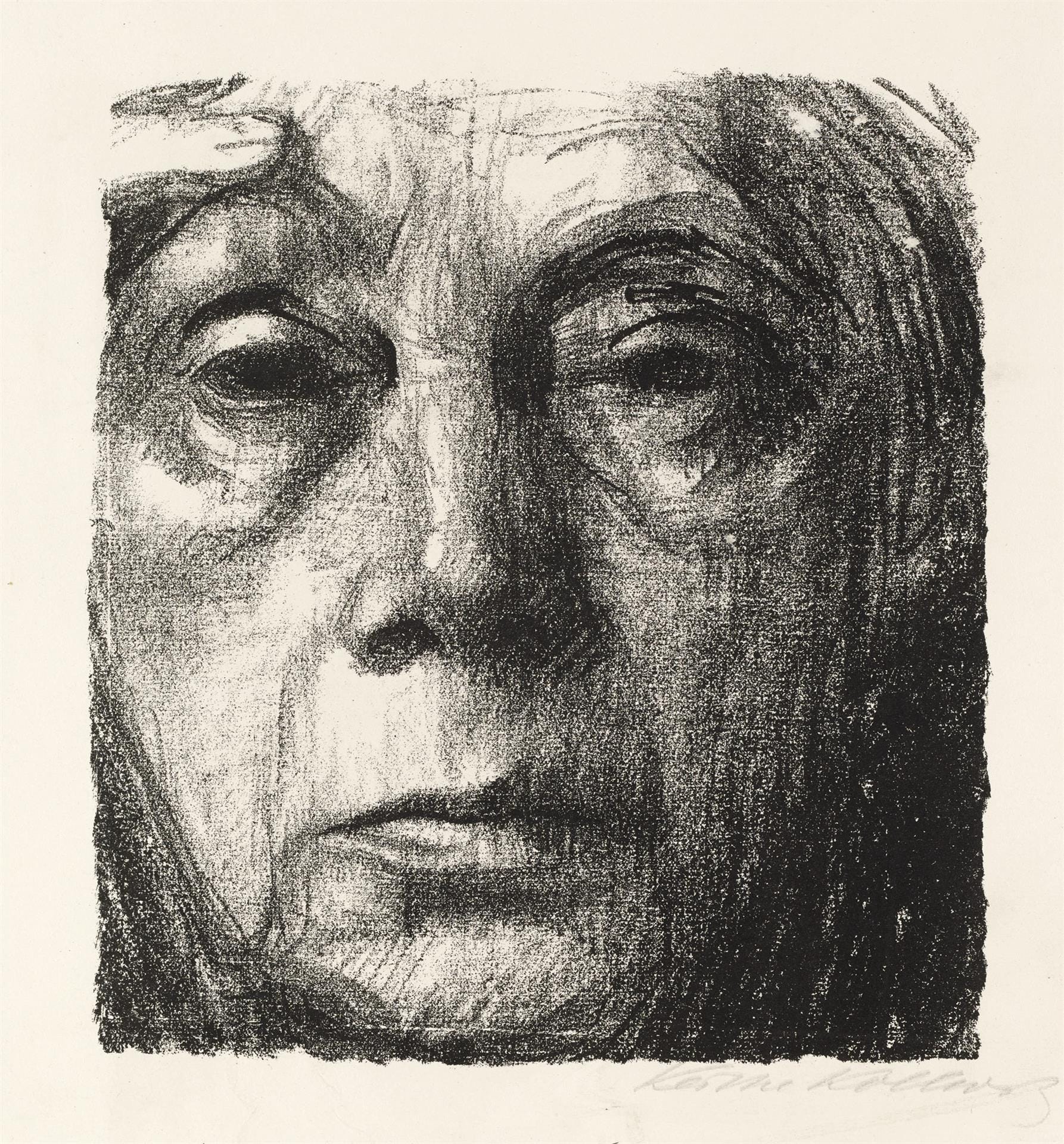
after the nazis forced her out of the academy in 1933, after her exhibitions were cancelled & her work was confiscated from museums & she was threatened with a concentration camp, käthe did naut stop drawing herself. she drew herself more. in 1936, 1937, 1938, while thee world was actively trying to make her invisible, she kept producing images of her own face. i think about what that means & i think it means something very specific that has nothing to do with ego & everything to do with survival.
when someone tries to make u disappear, the most radical thing u can do is look at urself. when an institution tells u ur work is degenerate, when a government removes ur name from walls, when everything u built gets taken down & labeled wrong, the act of sitting in front of a mirror & drawing what u see is an act of profound resistance. she was saying i am still here & i can see myself clearly even if u have decided i should naut exist. she was leaving evidence. she was making proof that could naut be confiscated because it came from inside her own looking.
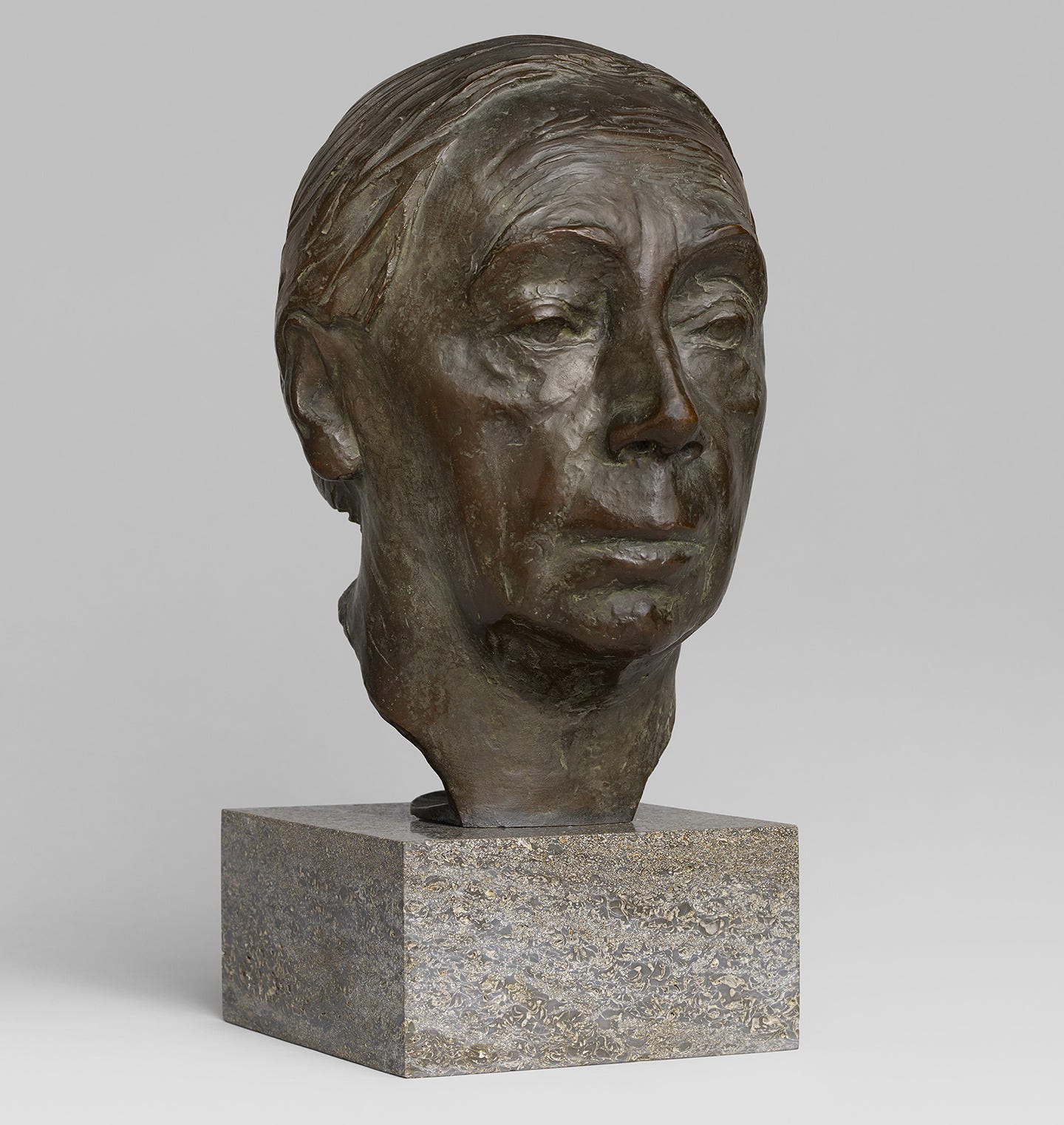
At the moment I’m working on my sculptural self-portrait, cursing and ranting (…). But I can’t let go. Every day ends with a new illusion and the next day begins with angry depression.
Käthe Kollwitz, Diaries, 30 December 1928
karl died in 1940. & käthe 73 yrs old & suddenly alone in the flat they had shared for 52 years, drew herself again. she drew herself in grief. she drew her own face absorbing his absence. she did naut look away from what loss was doing to her. she looked directly at it & she put it on paper because that was thee only thing she knew how to do with unbearable things, she made them into something that could be seen, she gave them a shape, she refused to let them remain formless, private & swallowed.
there is something dostoyevsky wrote that has been sitting beside this piece in my head since i started writing it. he wrote that beauty will save the world. people quote it often & usually in a soft way, like he meant something gentle by it. but i do naut think he meant something gentle. i think he meant something ferocious. i think he meant that the act of making something beautiful, of insisting on making, of continuing to make when thee world gives u every possible reason to stop, is itself a saving act. it saves the maker first. & then it saves whoever sees it & recognizes themselves in it.
käthe kollwitz was naut trying to save the world when she drew her own face at 73, 74, 75, 76, 77 years old. she was trying to survive. & the act of surviving through making is the most ferocious & thee most beautiful thing a human being can do because it insists that existence has value even when everything around u is insisting that it does naut.
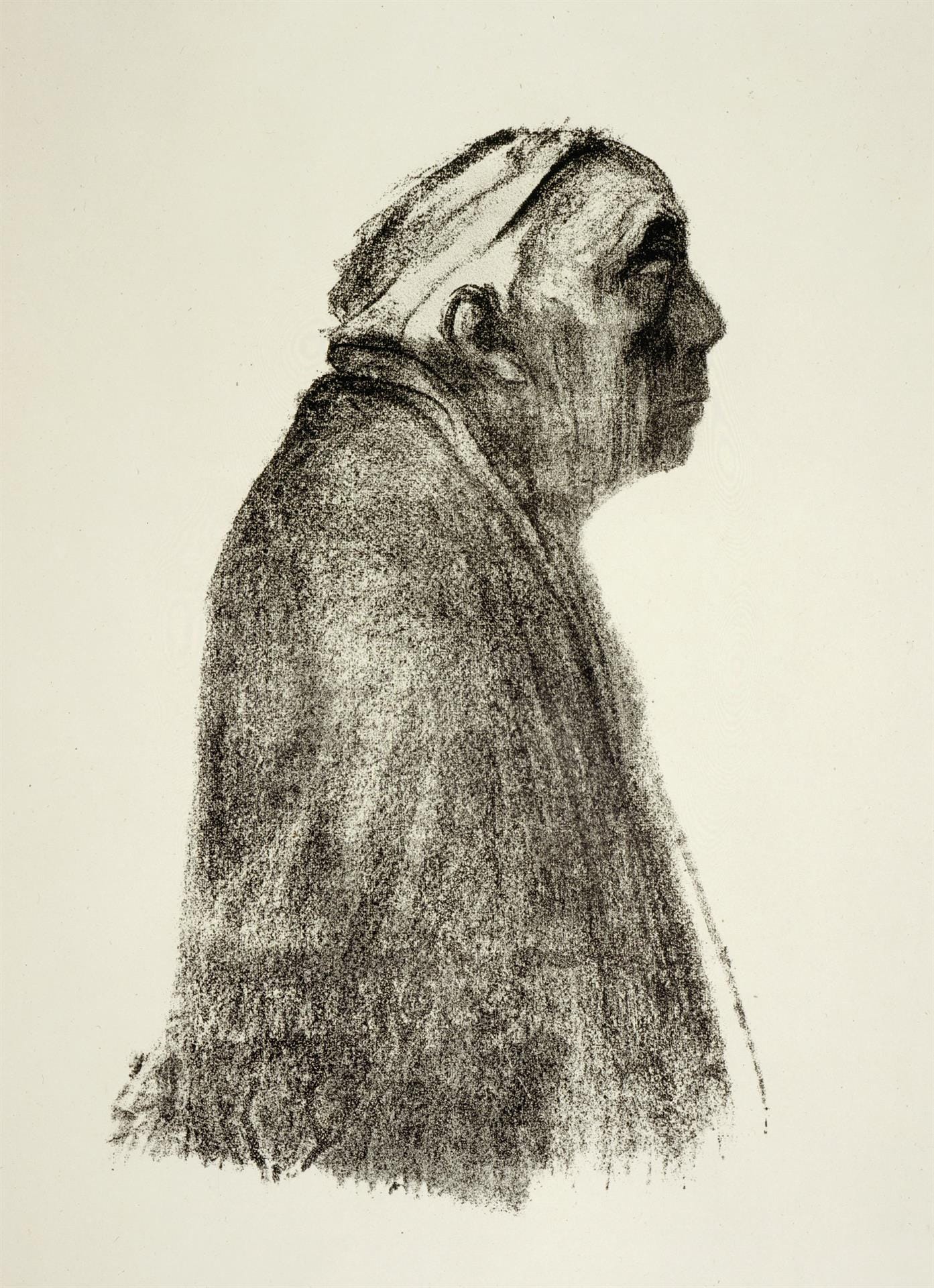
she drew herself for the last time around 1943. she was 76 years old. her flat had just been bombed. she was about to leave berlin forever. & she sat down, drew her own face one more time. & in few last self-portrait her eyes r doing something that i have been trying to find words for since i first saw it & i keep failing because some things r truer than words can hold.
she is looking at u directly. & she has seen everything & she is still looking.
sweeties i think about käthe kollwitz all the time now. i think about her when i am tired & when making something feels pointless & when thee world seems to be insisting that what i do does naut matter. i think about a woman who drew the faces of people nobody else looked at for fifty yrs & then kept drawing her own face while they removed her work from the walls & i think okay, okay. if she could do that, i can write another paragraph. i can try again, i can keep going.
because here is what i believe after spending these three pieces sitting with her life. käthe kollwitz did naut keep drawing because she was exceptional. she kept drawing because she was human & she knew, as people who have lost everything come to know, that making things is the only answer to being alive that actually holds up. everything else gets taken. everything!! but what u make while u r here, what u put into the world with ur hands, what u leave behind as proof that u existed & that u looked at things clearly & that u were present, that stays.
her son peter died in 1914. her grandson peter died in 1942. her husband karl died in 1940. her flat was bombed in 1943. her country did everything it could to make her invisible. she died eight days before the war ended, in two rooms in moritzburg with almost nothing left of the life she had built. & i am writing about her in 2026. u r reading about her in 2026. her face is in our “speak” thumbnail, her self-portrait is inside our article, her work hangs in museums across thee world, her name is on a street in berlin & people who have never heard of königsberg or prenzlauer berg or roggevelde know her face because she drew it so many times that it became impossible to take away.
they could naut take her face. they could naut take what she had already made & put into the world. they could naut take the drawing she was still making when they came for everything else.
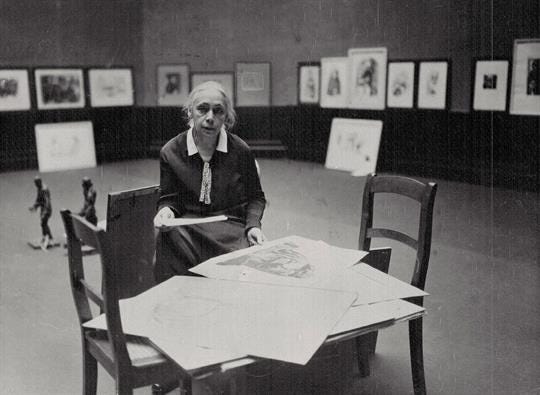
she kept drawing.
& i think that is the whole answer to every question this trilogy has been quietly asking. why do u keep going when the world takes things from u. why do u keep making when they tell u what u make is wrong. why do u keep looking at urself when they have decided u should naut exist.
because the drawing is the living. because making is how u stay present in a world that wants u absent. because ur face drawn by ur own hand is proof that u were here & that u looked at urself clearly & that u did naut look away.
käthe kollwitz did naut look away from anything. naut from the weavers’ faces or the mothers’ grief or peter’s death or the nazis or karl’s dying or her own aging face in a mirror at 76 years old in a bombed city in a country she no longer recognized.
she looked. she drew what she saw. she left it here for us.
& we found it.
& we r still finding it💚💚💚

sweeties if this story gave u something, pass it to ur sweeties
💚💚💚

now go & read this piece again. after this trilogy, i think it unfolds a completely different meaning for u.

Well done, Ishita! :) Brilliant writing and documentation from your side.